POCO F8 Pro Review | Upgrade To The Ultra?
So, I just reviewed the POCO F8 Ultra, and it was indeed pretty ultra from the stellar performance to the banging battery life. But if your budget isn't quite as ultra as this smartphone, well, maybe check out the POCO F8 Pro instead. That performance isn't quite as good. The camera tech is a bit crappier, and overall, it isn't quite as trouserous. But the POCO F8 Pro also starts from just over 500 quid here in Blighty, and Xiaomi are offering some pretty bloody good early bird sales.
But is the F8 Pro actually any good? Is it POCO or is it actually just a bit poo-core? Well, I've had my SIM slipped in there for a good few days now. Says my POCO F8 Pro review. And for more on the latest and greatest tech, please do poke subscribe, ding that old notifications bell. Cheers.
Design and Build
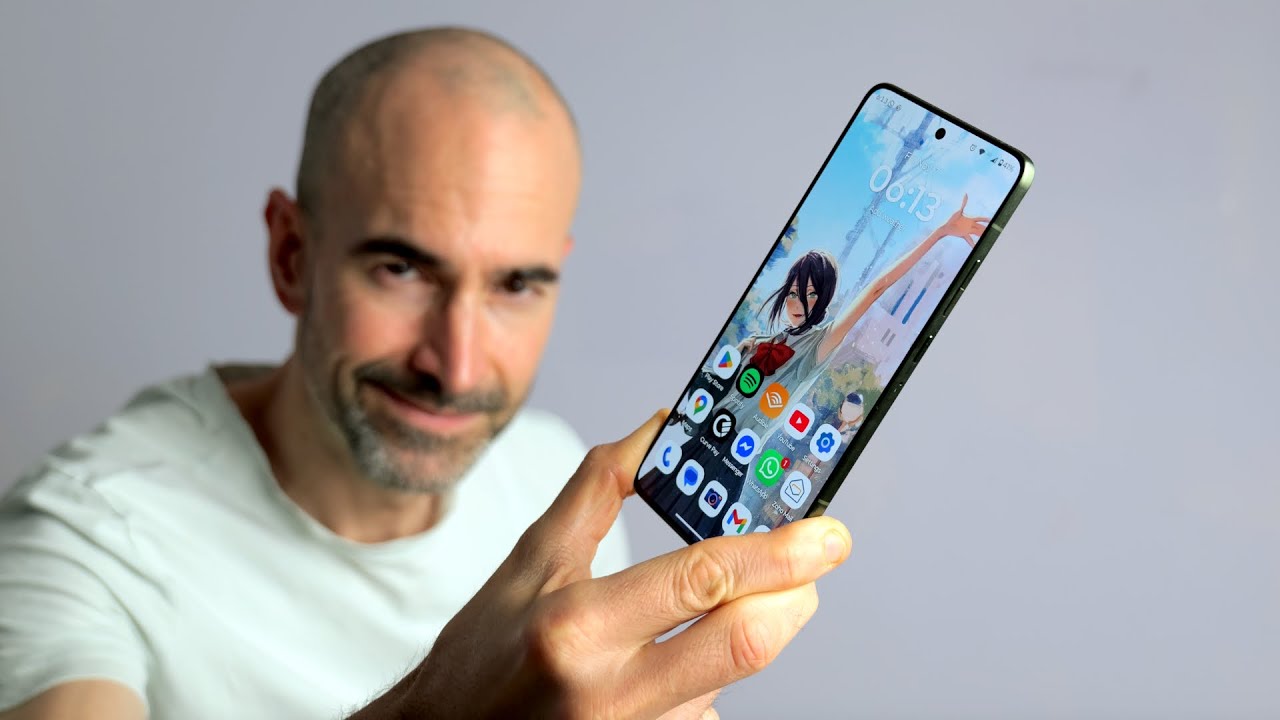
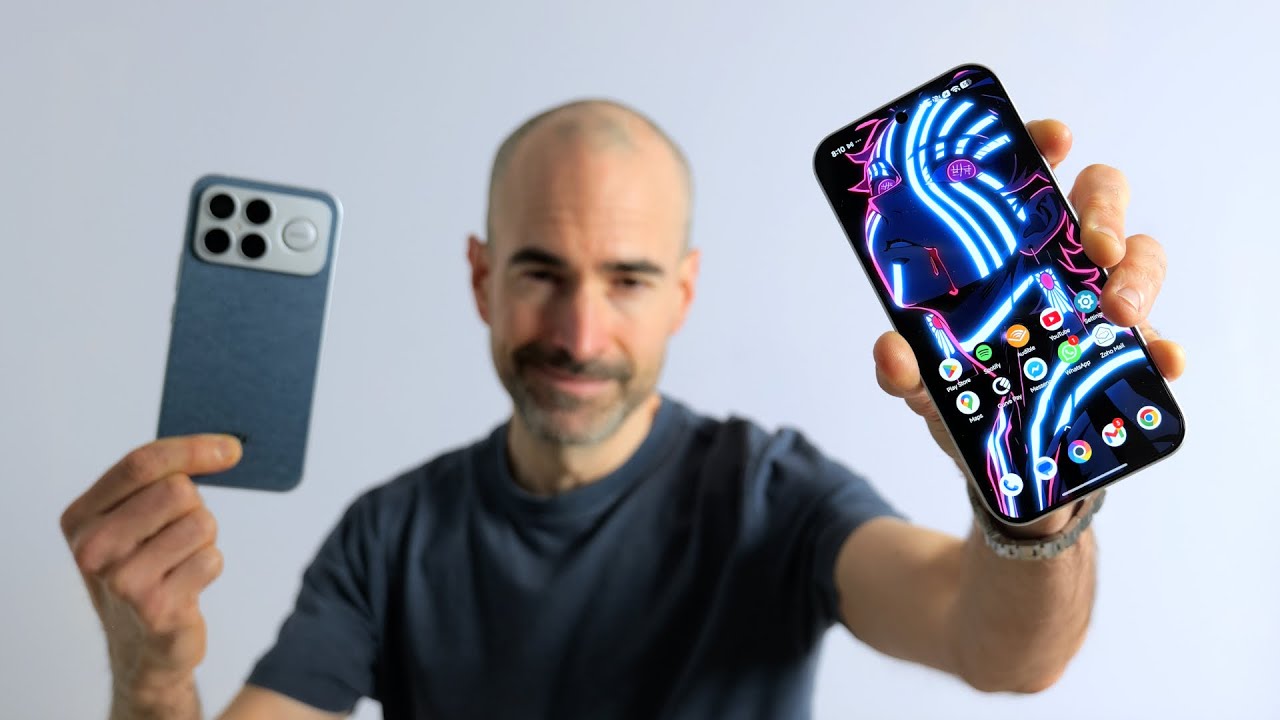
Right. Well, first up, at 6.59 inches, the POCO F8 Pro could certainly never be described as compact, but nor thankfully is it as finger-smashingly enormous as that Ultra model. So, certainly a better choice if you're not a fan of oversized handsets. And it weighs just 199g. So, overall, more comfortable to wield one-handed, even though shock horror, we've once again got that iPhone-style design, flat edges, flat everything. Not the most comfortable to clutch, but not uncomfortable either.
And if you do find yourself using your phone one-handed a lot, suddenly that old camera bump doesn't really work as a finger shelf because it doesn't stick out far enough. It seems like a funny thing to complain about, but I am a tech YouTuber. That's what we do best. Those bezels are once again pleasingly skinny and almost completely symmetrical.
You've got a metal frame and then apparently the rear end is forged from a single piece of glass, including the old camera bump there. But while the old camera housing is all shiny and reflective, the rest of the rear end is mercifully matte and that does a great job of resisting fingerprints, greasy, mucky, grime, all that kind of stuff. So, it's just a camera bump that you'll occasionally have to sort of dust off.
You can snuffle the POCO F8 Pro in three colors: black, blue, and this here titanium silver model, which has not a sniff of titanium in it. It just maybe looks a little bit titanium-y is all. I think it's just your usual aluminium alloy or aluminum if you come from America. You can't say words properly. That back end certainly appears to be tough enough to keep scratches at bay even after almost a week of full-on punishment.
Now, meanwhile up front, you've got a bit of Gorilla Glass 7i slapped over that display, plus a screen protector. Apparently, I can't say words properly either; should bug off to America, too. And it's IP68 dust and water resistant as well. So, certainly pretty damn durable. Only sign of wear and tear after a full week of my cack-handedness is this teeny little dent in the corner there, which I don't even think the camera will pick up.
Biometrics
And just like its more expensive sibling, you've got an ultrasonic fingerprint sensor slapped here on the POCO F8 Pro. And once again, absolute cracker. Comfortably positions your thumb just falls on it naturally and just works instantaneously. Practically never fails. In fact, I can't remember a single time when it has failed this past week. So, once again, the only time I've actually used the face unlock is just to make sure it actually works.
Software: HyperOS Version 3
Now, what else would you have on here? But, of course, Xiaomi's very own HyperOS version 3 slapped on top of Android 16, complete with four guaranteed OS updates, 6 years of security support. As far as I can tell, it's the exact same software experience as what you got on that Ultra model. You got the same split between the notification center and the control center, the same pretty deep personalization options, the same feature-packed gaming mode.
You've once again, of course, got full eSIM support as well as that Xiaomi offline communication for chatting with fellow folk who also have Xiaomi phones, even when you've got bugger-all reception, and a veritable trove of the usual AI shenanigans, of course, naturally.
And yeah, HyperOS is kind of like slipping into a bathtub filled with warm dairy cheese spread. Some people will love it, some people probably not so keen. And you know, there's a fair bit to gripe about here. Can be quite clunky and quirky at times, to say the least. Version 3 doesn't really do a huge amount to improve on version two, which just adds in more iOS-style features.
And as usual, of course, the POCO F8 Pro is absolutely overburdened with crapware. You got a choice of 256 or 512 gigs of storage. So even with all of this crapware stuffed on here, still got a ways to go before I fill that up. And thankfully, most of this bollocks can be swiftly removed with a couple of pokes. But I do feel at times that HyperOS gets a bit of a rough ride. It's not as terrible as some people make out. You just got to spend a wee bit of time when you first get the POCO F8 Pro just setting it up exactly how you like it and then you'll probably get on with it okay. But if you're intrigued and want to see more about HyperOS version 3, well, I've done a full dedicated video on that so I won't bang on about it anymore in this video.
Display
Now, the POCO F8 Pro sports a 6.59-inch AMOLED display. It's actually slightly smaller than average for these days, but still a cracker for flicking through your photo albums or enjoying some movies or games on the go. The picture quality is super fine thanks to the 2K resolution, and you got full Dolby Vision and HDR10 Plus streaming support in services like Netflix. Gorgeous contrast, natural-looking visuals.
Well, as usual, you can fiddle with it ever so slightly here in the display settings. Doesn't seem to make a huge amount of difference. It's got to admit when you swap to that vivid mode, you got a small selection of eye comfort shenanigans and full DC dimming if you are sensitive to that OLED flicker. The brightness skills from one measly nit up to around about sort of 2,000 on high brightness mode, which is perfectly bright for outdoor use.
I actually had bright blue skies here in Blighty for a small section of the weekend at least, which is pretty much unheard of this time of the year. But that visibility absolutely no problem. My only gripe would be the auto brightness. Sometimes still a bit too bright in those mornings. And every day it would be the same. I'd forget about it. So I'd grope for my phone, hold it about 3 cm from my face, switch it on, and instantly get blasted in the face. I felt like that dude at the end of Indiana Jones.
Audio
And you got yourself a stereo speaker setup here on the POCO F8 Pro. Not a triple speaker setup like the POCO F8 Ultra, but you've still got a posh bit of bass tuning and the audio spuffed out by this thing is more than good enough for YouTube, Netflix, etc. Even music doesn't sound terrible as long as you don't boost the volume all the way up to the maximum levels where it gets a bit tinny and distorted and the lack of bass is all too evident. But all the same on the audio front, POCO F8 Pro certainly better than the average blower. You got full support for high-res audio, Dolby Atmos, LDAC, etc. And I had no issues with Bluetooth streaming.
Performance
So, let's have a shufti at the performance. And the POCO F8 Pro is powered by Qualcomm's Snapdragon 8 Elite. That's the OG one, not the fresher new Gen 5 that powers the POCO F8 Ultra. But hey, it's still a bit of a beefcake, that's for sure. Everyday running pretty smooth, although you'll see the occasional wee judder here and there. Pretty sure that's down to HyperOS and not the actual Snapdragon chipset. Especially as that lead is backed here by 12 lovely gigs of RAM.
And if you're a gamer, well, you'll be able to enjoy a hefty bit of thumb-twiddling action here on the POCO F8 Pro. Even if you're well into games like Genshin Impact and Wuthering Waves, good old Wuthering and I went and jacked up those graphics settings up to the absolute maximum levels as usual, and it still played with a stable 60 frames per second. Only a couple of wee dips here and there.
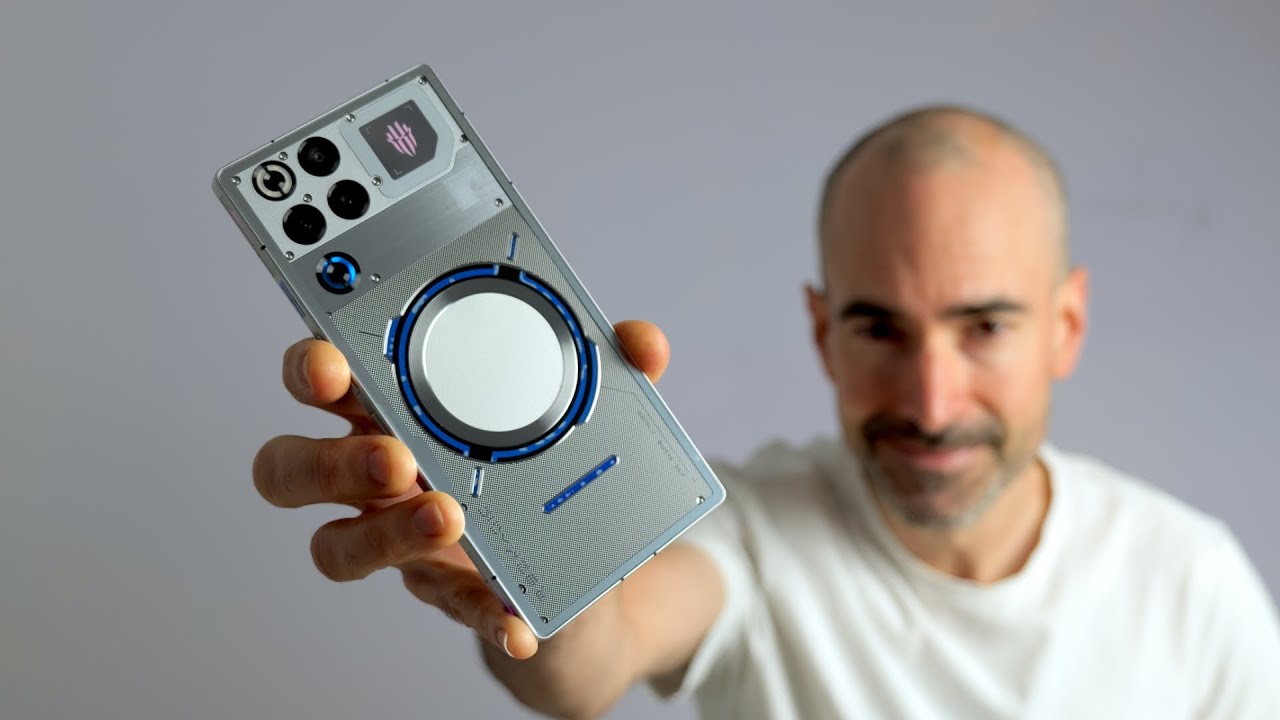
Xiaomi has also stuffed its 3D ice loop cooling setup into the POCO F8 Pro. But despite this, the phone did get pretty toasty when I was playing stuff like Wuthering Waves, especially up towards the top end, just around the general edges. Never got to the point where it seared my fingertips, but it did seem to have a slight impact on performance when you are gaming for over an hour. So, if you are a hardcore gamer, I'd say try and upgrade to that Ultra model if at all possible for the improved performance, the fact that it does stay nice and cool. Otherwise, there are other alternatives out there with that Snapdragon 8 Elite Gen 5, including the fresh new Red Magic 11 Pro.
Battery Life
Only a slight downgrade for the battery tech here on the Pro, though. The Ultra model had a 6,500 milliamp capacity cell, 6,200 here on the Pro, which is still pretty ruddy good. And I found that my most intensive days with the Pro, I'm talking a solid seven or eight hours of screen on time out all day in town using the mobile networks, a bit of video chat action, lots of camera testing, etc. I would be dipping into the power saver mode by the end of it, but you know, no real risk of actually running dry.
And on your more typical day where I'd only be out a wee bit and mostly just knocking around here doing a good bit of messaging, internet browsing. Again, bit of video chatting, plenty of Netflix streaming and a good bit of angry shouty metal music to get me through the day as well. I typically end with more sort like 30 to 40% battery life remaining.
However, playing games like Wuthering Waves on the Wild Boost mode did suck the life from this thing shockingly fast. Around 3 to 3 and 1/2 hours of action is all you can expect from a full charge, which is definitely under par for a modern blower. But at least bugger-all worries if you need to do an emergency top up of the POCO F8 Pro. It supports 100-watt wired charging. So even if it's fully drained, you can get it powered back up to 100% in under an hour. No worries. But Xiaomi has culled the wireless charging from the POCO F8 Pro in order to save a bit of cash, I guess.
Camera Test
And so, my lovelies, just before we smack this lovely POCO F8 Pro review over the head with a shovel and bury it in the woods, let's take a squint at the old camera tech. And you do have completely different hardware here to the Ultra model. So, for instance, the main shooter is a 50-meg Light Fusion 800 sensor. That's a one over 1.55-inch sensor. That's actually been recycled from last year's POCO F7 Pro. And it's certainly not as big as the 950 sensor stuffed inside of the POCO F8 Ultra.
And the Pro model does an okay-ish job of capturing high contrast scenes in a fairly natural manner. You won't see much saturation creeping in there. Although this can of course vary depending on the POCO's mood. So in HDR situations, there's very little bleaching in those lighter areas. But on the flip side, sometimes darker areas look rather murky and are missing any kind of finer detail.
And those low light capabilities are even more limited. Often in ambient light, I got slightly fuzzy, flat photos. And even on a couple of occasions, the focus seem to completely lose the plot. And meanwhile, any kind of motion will result in a blurry pick. In fact, the POCO F8 Pro generally disappoints with action shots, even with motion capture toggled on. In decent daylight conditions, you'll still often end up deleting pics because they turned out rather pants.
Now, also that portrait mode sometimes did all right, but often was just a bag of guff, struggling to actually pump out a crisp image of my subject's face, especially if said face is on the furry side. And Xiaomi has also slapped a 50-meg telephoto snapper on here with 2.5 times optical zoom, although they're remaining tight-lipped about which sensor it actually is. And this is fine to a point for generally zoomy affairs in decent lighting as long as you don't try to punch in any further than around the sort of 10 times level. And sadly, yes, like the main sensor, it's proper balls in low light.
And last up, the POCO F8 Pro sports a basic 8-meg ultrawide shooter, which can mostly be ignored, but it is there if you need it. But of course, as always with Xiaomi's camera app, you've got a pro mode you can swap to to play around with the likes of the ISO levels, the white balance, the autofocus, etc. You can also boost the resolution to high-res 50 megapixel photos. You can also capture images in RAW.
Video Recording
And if we swap to the old video mode, you can actually shoot your home movies in 8K resolution if you fancy at 30 frames per second. If you want to bump the frame rate to 60 fps, you'll have to chuck it down to 4K resolution. And then you also bring the telephoto lens into play. Sadly, the ultra wide can only record in full HD. I shot all of this test footage at 4K resolution and on the whole those visuals are fine as long as yet again the lighting doesn't suck ass. You can zoom up to five times while recording and still keep a sharpish picture. Certainly good enough for viewing back on a tablet or a laptop.
The stabilization is pretty good. It snuffs out the worst of the judder if you are shooting while walking without feeling too mechanical. However, generally every bit of wind is picked up by those mics. So that does limit the POCO F8 Pro's usefulness outside.
And then last up around front, you've got yourself a 20 megapixel selfie camera. And using that front-facing camera, you can only record full HD resolution footage. No 4K option sadly. So yeah, it's full HD at 30 or 60 frames per second. But again, the audio pickup is clear enough so you don't need to worry about slapping on Bluetooth headphones or whatever if you are doing a bit of video chatting.
Verdict
And there you have it, my lovelies. That in a delicious sweet nutshell is the POCO F8 Pro. My full review after using it as my full-time smartphone for several days. And I got to say, slightly disappointed here. Certainly after coming straight from the POCO F8 Ultra, which was an all round banger. That camera tech for one certainly nowhere near as capable as the Ultra's especially when it came to HDR type scenarios and low light stuff. The gaming chops aren't as solid. Bit of overheating when you are playing the likes of Wuthering Waves for more than around sort of 20 to 30 minutes. Battery life's still pretty good, but of course you lose that wireless charging and of course not forgetting that surprisingly enjoyable triple speaker setup.
So, I'd say if you can try and upgrade to the POCO F8 Ultra if you are tempted by one of the new POCO blowers. Otherwise, alternatives like the OnePlus 15R are lingering right on the horizon. Come back soon for a special bit of Uncle Sperty action with that one. And if you want some other alternative ideas, I've rounded up my favorite mid-range smartphones right now in a separate video. So, let us know what you reckon of the POCO F8 Pro down in the comments below. Please do poke subscribe and ding that notifications bell for more on the latest and greatest tech and have yourselves a ruddy wonderful rest of the week. Cheers everybody. Love you.