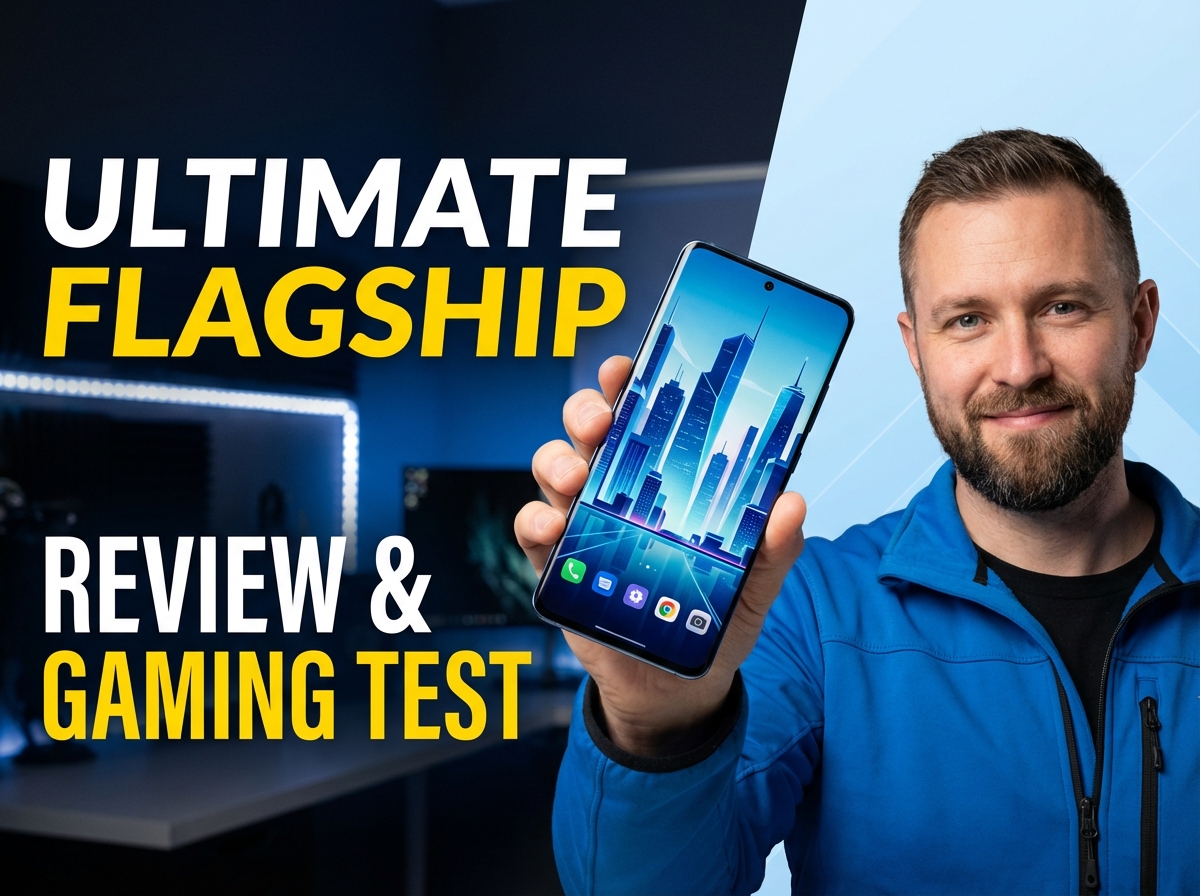
Xiaomi 12 Pro Review | Two Weeks Later...
For the last fortnight I've been using the Xiaomi 12 Pro super-premium flagship smartphone as my full-time personal handset. If you're a wee bit bored you might be looking for an alternative to the Samsung Galaxy S22s, the iPhone 13s and all those other premium-priced smartphones right now—well, maybe give this one a shot.
The Xiaomi 12 Pro is stacked with premium hardware: the Snapdragon 8 Gen 1 chipset, that gorgeous Dolby Vision AMOLED display, and the triple 50 MP camera setup that can take on those Sammy and Apple smartphones, no worries. However, while Xiaomi's main USP used to be putting out affordable flagship phones, unfortunately the 12 Pro will cost you $999, which means it'll be the best part of a grand when it lands here in Blighty. So, is it actually worth that sky-high price, and what is the everyday experience like? Here's my full Xiaomi 12 Pro review.
Design & Build
Let's start with that rather dapper design. While the Xiaomi 12 Pro won't exactly be turning heads with any outlandish frills or unique aesthetics, it is a smartly dressed blower that could actually pass as some kind of business phone—especially in this here grey hue—great news if you're one of those suit-wearing types.
The Pro's got a metal frame and Gorilla Glass Victus finish front and back. Even a couple of weeks on, with plenty of abuse, this thing has not got any scratches, scuffs or other damage, and that matte finish on the back end does a bang-up job of repelling greasy prints and the like. The 12 Pro is pretty bloody big at just over 6.7 inches, so you're gonna have to go in there with two hands unless you've got mitts the size of the Hulk's—especially as it is a fairly slippery wee blighter. The 205 g weight isn't outrageous compared with some other flagships.
One of the big drawbacks, though, is there's no official IP rating for water and dust resistance, unlike pretty much every other flagship smartphone out there. It's absolutely fine if you give it a bit of a splashing, but I was far too much of a wuss to actually dunk it underwater in case that absolutely bollocksed it.
Software
On the software side you have fresh Android 12 with Xiaomi's own MIUI 13 launcher stuck on top. It's a potent combination—not quite fish and chips, but definitely at the very least Dick and Dom. I do have a few wee complaints: despite having Android 12 you can't actually change the colour of the UI based on the wallpaper you're currently rocking, and when I first set up the phone it took a fair bit of tinkering to get app notifications coming through in a timely manner. As usual you've got tons of crapware bundled on there from the off, so you'll have to go through manually uninstalling the stuff you really can't be arsed with.
Apart from these minor bollocks, MIUI behaved itself remarkably well following a massive four-gigabyte system update. In two weeks of full-time use I literally saw one tiny stumble where the launcher kind of forgot what it was supposed to be doing—bit of brain freeze, happens to the best of us—and then it sorted itself out. Also, Xiaomi hasn't quite sorted the palm-intrusion thing: with that curved screen bending ever so slightly around the edges, I found when lying on my back or lounging in bed I had to grip the phone harder, and the screen went a bit wonky, occasionally selecting stuff I really did not want.
Display
Speaking of that screen, it is a proper stunner to rival any flagship. The spacious 6.73-inch size means watching movies and playing games is perfectly comfortable, while the AMOLED tech delivers sharp contrast and poppy colours. You've actually got Dolby Vision as well as HDR10+ support, and those visuals are beautifully realistic—especially if you bump the resolution to maximum WQHD+ and stream some ultra-high-def video. On top of that it's LTPO tech, so the full refresh range from 1 Hz all the way up to 120 Hz is supported and can dynamically adjust to suit whatever you're up to. In every possible way the Xiaomi 12 Pro's display is one of the best out there.
Audio
According to Xiaomi this blower boasts four speakers, although media blasts out of only two edge-mounted grilles plus the earpiece. Audio isn't quite a match for front-firing speakers on gaming handsets, but I still enjoyed the crisp and reasonably loud output, helped by the dual tweeter and woofer setup and possibly some Harman Kardon fine-tuning. Of course this isn't good enough to make music sound decent, and the 12 Pro is jack-less as usual, but I had zero issues streaming to speakers or headphones with Bluetooth 5.2 and Dolby Atmos. The phone did continuously nag me to stop listening to music on headphones because it damages hearing—joke's on you, my hearing's already proper knackered—and it also scolded me when I was actually streaming to a speaker, so I'm not sure what that's about.
Performance
Performance-wise, when you're spunking out this much cash you'd hope there are no issues, and indeed there aren't. You've got Qualcomm's top-end Snapdragon 8 Gen 1 stuffed inside, connectivity is flawless with Wi-Fi 6E and 5G, and everyday running is buttery smooth. Gaming on the Xiaomi 12 Pro has been joyous: like other Gen 1 handsets the Pro can absolutely crotch-thrust its way through any title, even Genshin with maxed-out graphics at 60 fps. It's not utterly flawless— you'll see the odd firmware dip—but overall it's very fluid. Xiaomi's liquid-cool tech keeps the internals from spontaneously combusting, and the 480 Hz touch sampling makes the screen pleasingly responsive. You've also got the usual excellent selection of gaming tools laid out smartly and intuitively.
Battery Life
It's not all good news, though. The battery is only a smidge bigger than the regular Xiaomi 12—4,600 mAh—despite this thing being an absolute behemoth, and I found battery life isn't as strong as a lot of rivals, especially the Oppo Find X5 Pro. On one of my busiest days, for instance, the 12 Pro was dead by about 6 p.m. with only around five hours of screen-on time. Compared with the Find X5 Pro and the Pixel 6 Pro this definitely drained faster; some nights I was squeaking into bed with just a couple of percent left. I suspect some of this drain is down to software quirks that could be fine-tuned—one day Wi-Fi was the main culprit. Hopefully these niggles can be sorted and battery life improved over time.
The good news is if you need an emergency top-up you've got 120 W wired charging and 50 W wireless charging: literally plug it in for ten minutes and you're pretty much good to go again.
Cameras
While the regular Xiaomi 12 packs the popular Sony IMX 766 sensor, the Pro upgrades to another 50 MP Sony sensor, the IMX 707. The big question: is it any good for everyday snaps? You certainly get good-looking shots on full auto even when lighting isn't ideal, but don't expect natural-looking photos like you get from the Oppo flagship or the Pixel 6 series—the 12 Pro tends to boost colour tones to make everything look more vibrant, whether you leave AI on or off. I appreciated some of the vivid results, but it would have been nice to have the option of punchy or natural.
No complaints shooting living subjects: the 12 Pro boasts eye-tracking as well as motion-tracking focus, and this works beautifully, keeping even rapidly departing children and pets sharp. At night the Xiaomi flagship again proves one of the best around—image capture takes only a second or two, processing is quick, and you're left with a bright photo boasting impressive detail and minimal grain. The regular Xiaomi 12 also does a bang-up job in low light; the Pro tends to produce slightly brighter shots with a bit less green, but it's not a massive gulf.
You also have a 50 MP ultra-wide-angle shooter for a more pulled-back view with similar visual results and only a wee bit of distortion at the edges, and a 50 MP telephoto offering a basic 2× optical zoom—same as the Find X5 Pro but inferior to quite a few flagships. It's still more than good enough for getting closer to your subject without disturbing them, though don't expect sharp returns above 10×. That said, the 12 Pro serves up a Super Moon mode which can snap that big ball of rock with impressive clarity if that happens to tweak your wing-nuts.
Video & Selfies
I also appreciated the video results: you've got 8K recording chops if you're into that, but I kept the phone set at 4K/30 or 4K/60 with an HDR10+ option when dealing with dodgy contrast. Stabilisation is strong, tracking is dependable, and even when lighting isn't great you can expect respectable detail and good audio pickup.
Up front you've got a 32 MP selfie shooter—good for your Instagram-able moments if you don't mind sharing every bag and wrinkle, with the usual beauty-mode guff if you'd rather look like a plastic mannequin. At night the 12 Pro does a solid job, and you can capture Full HD footage at 30 or 60 fps—no 4K option, but absolutely fine for vlogging, especially as audio capture is strong.
Verdict
So, there you have what I think of the Xiaomi 12 Pro after using it as my full-time smartphone for a couple of weeks. It's kind of a shame that Xiaomi's flagships are no longer the more affordable option compared with the Samsungs and Apples of the world, but thankfully the Xiaomi 12 Pro justifies its sky-high price by being pretty bloody good in basically almost every area. You've got some seriously premium tech here, the software experience was enjoyable, and the camera is fantastic—one of the best out there. It's just the battery life: if Xiaomi can somehow magically sort that out in an update then brilliant; otherwise I'd rather go with something like the Pixel 6 Pro, which has more dependable battery life, can capture more natural-looking pics, and is a bit cheaper.