BEST Midrange Phone 2025? - Galaxy A56 vs Pixel 9a vs iPhone 16e vs Nothing 3a Pro
In a world of expensive flagship phones that all look the same year after year after year, the mid-range phone has quietly been catching up. In fact, for almost a month now, I've been using a mid-range phone as my everyday phone. And to my surprise, I actually don't really miss my Galaxy S25 Ultra. Don't get me wrong, there are definitely benefits to a flagship phone, but the mid-range experience is probably closer than you might think.
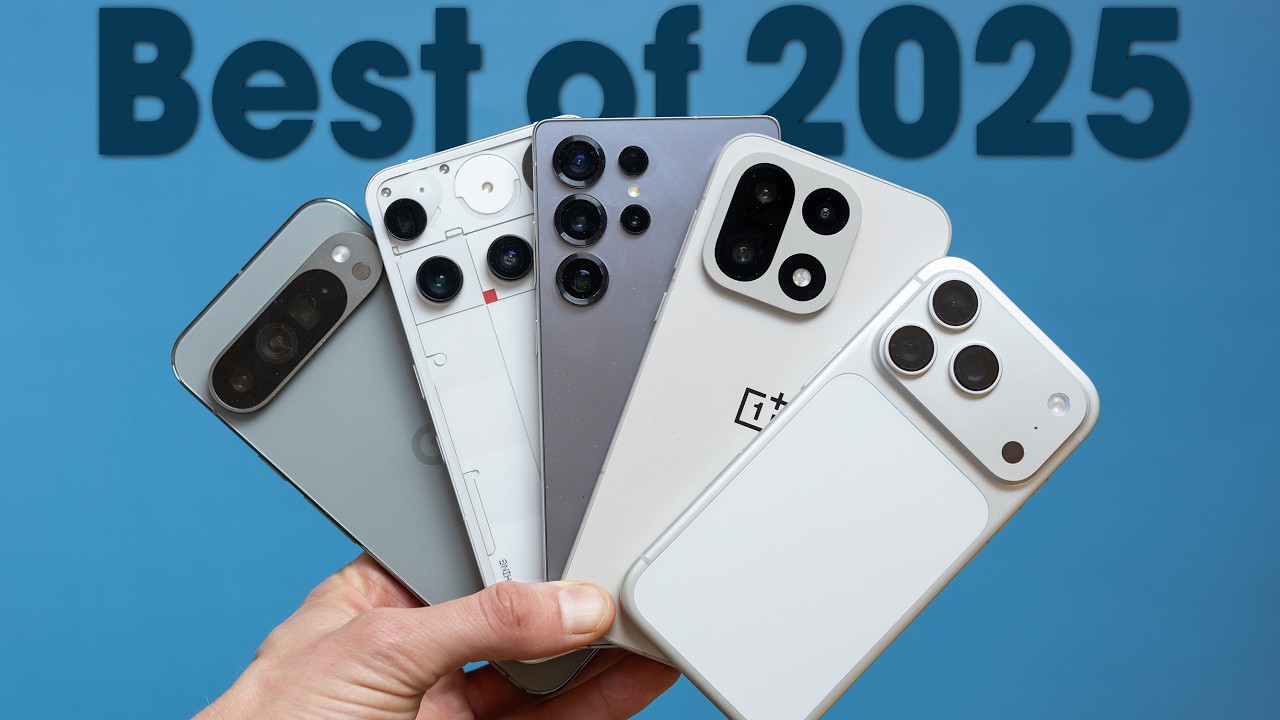
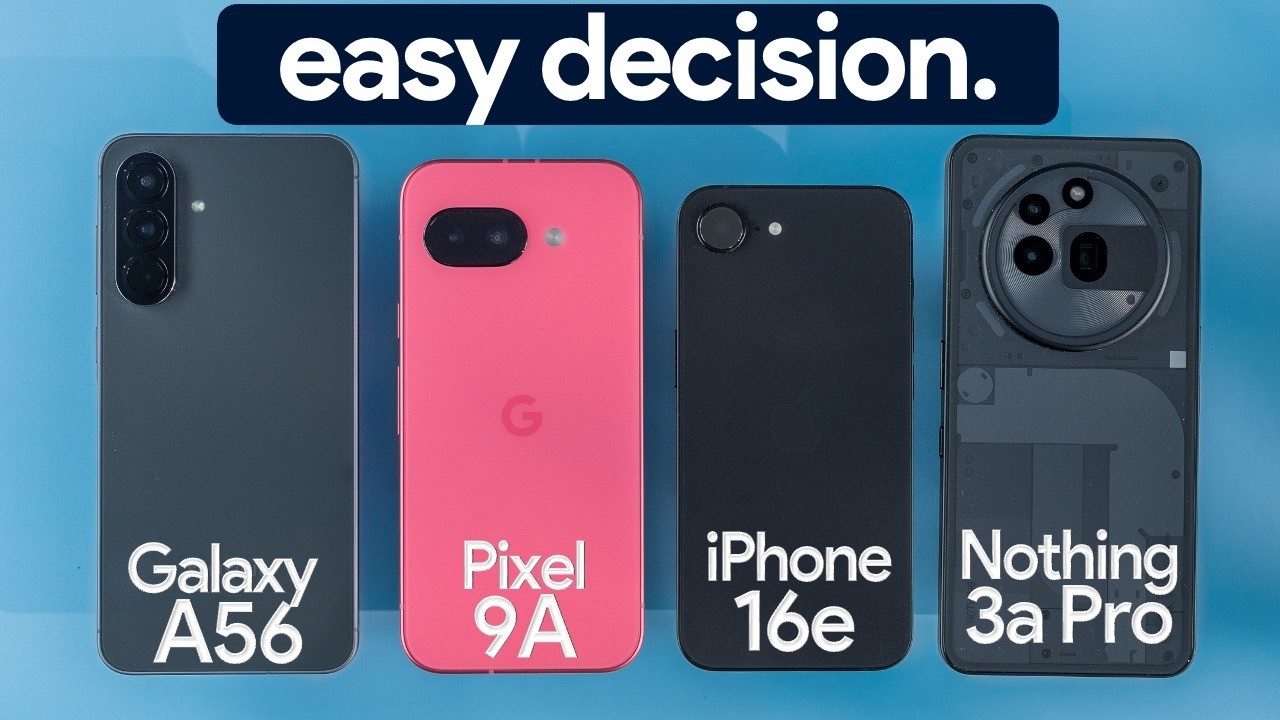
So, last week, I polled everyone on my socials asking what is the best mid-range phone, and these are the four you wanted me to compare. And in this video, we're going to figure out which one actually offers the best experience at quite literally about half the price of a flagship phone, as all of these really do.
Prices and Models
So, jumping right into category number one being the prices and which phones we're actually talking about comparing in this video. So, we have four phones.
Samsung Galaxy A56
The first one in no particular order is the Samsung Galaxy A56. Now, I purchased this with my own money on Amazon for $439. Something to note though, this is the Latin American model. In the US, they don't actually have a domestic one shipping yet. They do this every year. It's the same exact phone essentially, but it'll probably be coming out very soon. So, depending on when you're watching this video or where you're watching it, it really shouldn't change too much there.
Pixel 9a
Then, we have the Pixel 9a. This is $499, but Google let me borrow this one to compare for this video.
iPhone 16e
Similarly, Apple let me borrow the iPhone 16e, which is $599. And by the way, this does not influence my opinions if it was gifted, loaned, or purchased by me. I'm going to cover both pros and cons on all of these as you'll see in this video. I just think it's really valuable to be as transparent as possible so you know exactly what the video is. By the way, this video is also not sponsored by anybody. No brands have any input on this at all. This is entirely my own opinion.
Nothing 3a Pro
But continuing on, we have the Nothing 3a Pro. This is somewhere in the middle of the price range here at $459. And this is the only one on the table that was actually gifted to me. In fact, Nothing sent me like a bunch of these phones. Maybe later in the video I'll talk about if we want to do a giveaway. Like I don't need all these phones. They also sent me their Nothing 3a Not Pro, which is $379, which I'm not going to be talking about as much in this video. Just something to be aware of.
The Common Theme
So, that's category number one. Before we get into category number two, I want to point out something you're going to notice throughout this video, and that is that there's kind of a common theme here. There's two schools of thought on how to make a mid-range phone. You could either do everything that a flagship phone does but at a slightly less good level or you could do fewer things but do them at the flagship level. So keep an eye out for that.
Designs
Nothing 3a Pro Design
Now let's talk about the designs of these. Again, in no particular order, we have the Nothing 3a Pro. First of all, I really personally like the way this is kind of being bold and different. There's a lot that's going on in the back. Like I said, in a world of mundane phones, this is one that really does stand out. If you put a case on it, obviously that doesn't really matter. And if you put a sticker on the other ones that looks like this, again, that kind of negates the whole thing there.
But this does have some glyphs on the back that light up when you get notifications or if you have a timer or there's a number of things that will interact with the glyphs on the back and have different lights meaning different things. This is IP64 water and dust resistant. The four is a little bit lower than I would like to see. So, you can splash this, but you cannot submerge this. And I think that's a little bit of a drawback in that sense.
There is a glass back on here, which is nice. But the thing that throws me off and just to me personally feels weird is that the sides are actually plastic on this phone. Additionally, on the right side, we have a very low button. So, I don't have... I'd say maybe I have larger hands. For me, that low button is like really awkward to reach down to. The power button is in a fairly natural spot, but they're very close together. And although they have different shapes and you can feel them and get used to them, I find that I do hit the wrong button a lot. The bottom button, I'll talk about that in software. It's an AI button. We'll talk about that. On the other side, the volume rockers. I like how they're on opposite sides. Not all phones do that.
Pixel 9a Design
Then we have the Pixel 9a. This is a very light, extremely slim phone. So unlike the Nothing Phone, and unlike the Galaxy, this one has almost no camera bump at all. So we're kind of going back in time. This feels... it kind of looks a lot more like the 4a, so five generations ago. Ultra slim, though. I think that's a big positive. The back feels like glass, but I believe it's actually polycarbonate. It just is a pretty nice feeling back. And then the rails are aluminum, which I'm used to with flagship phones. It just feels more premium. I would rather have aluminum rails and plastic back versus plastic rails and glass back.
Something I'm used to, but I don't particularly love about the Pixel is that the power button and the volume button are on the same side. So, taking screenshots in that sense is a little bit less convenient. There are gestures that fix that for you, but again, like I have two fingers right here, it would make more sense to kind of have it on the other side in my opinion.
Galaxy A56 Design
Then the Galaxy A56 has again a lot of notes of flagship design here. It actually looks very similar to their flagship S series lineup. You can see the triple camera on the back. The glass back does attract quite a number of fingerprints here, but the metal rails on the outside just feel solid in the hand. And in a blind holding test, I would say it's going to be very difficult to identify this as a mid-range phone.
It's also IP67 water and dust resistant, which is great. Just like the Pixel, you are going to be able to dunk this in the water, don't do it. But if you drop it in the water for a little bit or take a quick underwater photo, technically you should be fine. On the sides, they have kind of a flat edge and then it kind of goes up a little bit around the buttons, so it keeps the buttons very slim in their profile. They have a nice tactile feel to them and just, you know, simple buttons on the same side, much like the Pixel.
iPhone 16e Design
Then the iPhone just looks and feels like a regular iPhone. A little bit slimmer than a lot of the newer iPhones with a very small camera bump. Obviously, only one camera on the back. The back is glass, the sides are aluminum, and again, I really like the buttons on here, how they are separated, so it's not a rocker, and they are on opposite sides. The power button, and we also have an action button up there that again, I'll talk about later in the video, but you can program that, for example, to open a camera or put your phone in silent mode or something like that. It's also IP68 water and dust resistant. So, again, good durability from that standpoint.
Wobble Test
Something I want to point out with these designs, and this is going to be a big one, the thickness, and obviously the size of these does vary quite a bit. If we flip them all over, though, I want to do a quick wobble test. You can see the Pixel has nearly no wobble. The iPhone has very minimal wobble. The Nothing Phone really doesn't have a ton of wobble because it is a centered camera protrusion there, but the Galaxy wobbles a lot. If you're doing a lot of like, you know, navigation on your phone when it's on a table, that can get a little bit annoying. And as far as colors go, I'll have links in the description if you want to see what all the colors are, as well as the latest prices. Sometimes sales happen and stuff like that.
Biometrics
Now, looks definitely matter, but I would argue one of the most common things you're going to do on this phone is sign into the phone. So, they do all have biometrics, which is nice, but they do them in very different ways. So, Android always allows you to have a face unlock if you want to. But the Pixel is unique in that that face unlock can actually be used to unlock things that require biometrics. So, not just your phone, but maybe your banking app or something like that. And other phones may be able to do that, but Pixel is really the one that I would say does that the most reliably and the most smoothly.
All of the Android devices have fingerprint sensors on the display. So, the Pixel, the Nothing, and the Galaxy, whereas the iPhone has that gigantic chunky notch on the top, that is going to be using Face ID or face unlock rather than having a fingerprint sensor. The optical fingerprint sensor on the Pixel, I have to say, after using it for a while, does get a little bit frustrating to me. But the facial recognition often unlocks it before I'm able to even type my PIN in. So, I'll try my finger a couple times. Sometimes it doesn't work and then face unlock as soon as I like, you know, take sunglasses off or whatever, it'll sign me right in.
Now, even though the three Android phones have a fingerprint sensor, it's wildly different in experience in my opinion. Just look at how low it is on the Galaxy. It's all the way on the bottom. So, you have to push your thumb in a really uncomfortable way to do that. Now, if you are maybe if you're doing boomer style, just like jamming your finger, then yeah, that's an awesome spot for it. But if you're using your thumb, as I think many people are, the Pixel's a lot higher and a much more natural spot to place your thumb without doing some kind of hand gymnastics to sign in. And you see the same thing on the Nothing Phone. The fingerprint sensor is all the way on the bottom there. So, definitely a matter of preference, but I think the Pixel probably wins in that category.
Displays
And now we have the displays. Looking at all of these, I think like the bezels are going to be a huge thing you're going to notice right away. I noticed it immediately on the Pixels. Maybe because this is kind of a pinkish phone, so it really highlights those bezels. The black phone is a little bit less obvious, but the iPhone certainly has giant bezels as well and a notch on the top. And in fact, I noticed this weird little bug with the iPhone where when you first turn it on, there's a thin black bar of pixels on the top that then go away as if it doesn't realize it has a notch there, and then remembers it and starts adding pixels. It's weird that it always does that. I've updated the phone and it still does that.
The Nothing Phone kind of appears to have the slimmest bezels. Maybe it's an illusion, but they look probably the best in my opinion. And the Galaxy, I think, is pretty acceptable for this size. Really, the Pixel is the one that is the most of an eyesore.
As far as the displays go, the Nothing should have, I believe, the brightest display at about 3000 nits. It's a 6.77 in display, so the largest out of this group, and 120 Hz AMOLED full HD plus. I'm not going to keep mentioning full HD plus. These are all essentially 1080p plus or minus displays. They're all going to have a very similar resolution.
The Galaxy A56 is slightly less bright, rated at 1900 max nits, also 120 Hz. It's a 6.7 in, so very slightly smaller. Um, but, you know, still a fairly large phone there. And it's a super AMOLED display.
The Pixel 9a is 6.3 in. has an actual display and ranges from 60 to 120 Hz. So, the display is really quite nice on here. Even though it's kind of the midsize between them, I still think it, you know, it's pretty pocketable. It's a good size for most users.
Then we have the iPhone 16e, the smallest of them at 6.1 in, which is perfectly average. There's nothing wrong with 6.1 in. 60 Hz display, and it is a true tone display, much like the other iPhones. But 60 Hz is going to be the kicker here. A slower refresh rate. If you're not used to a faster one, you won't really care. But switching between them, that's one that like I definitely notice as you move around, it just makes the phone feel like kind of stuttery. Makes it feel weird. I know it's very smooth in the OS, but I noticed that a lot.
Camera Comparison
Now, let's get into a camera comparison for all of these. All right, so let's take a look at these photos. And feel free to comment and let me know which one you like best. These all have a really different style of photos from Color Science. They all have a natural bokeh though as you can see right here. But still a lot of difference in sharpening here. I think the Pixel 9a got my skin color correct. The others really varied a lot from being too red to being too pale. Look at the iPhone here on the flowers. Extremely sharp while the others were either a lot softer or the Pixel 9a again I think did a pretty good job here.
If you're zooming in, most of these phones max out at between 8 and 10x. But the Nothing 3a Pro can go much further than that. Regardless, here's an 8x photo. You can see the text is so much more legible on the Nothing phone with that periscope lens.
Then going to just another indoor shot. I'm going to go out to ultrawide here and just show you what you're actually missing with the iPhone 16. Unfortunately, not having the ultra wide lens. This is a video test with the Pixel 9a. If we zoom out, get to the ultra wide lens. And this can also zoom in up to 5x.
All right, video test in 4K with the Nothing 3a Pro. Something to note, the ultra wide lens is only 1080p, so I can't use it in 4K. We can zoom in at up to 8x here using the telephoto lens.
The Galaxy A56 filming in 4K right here. See if we can zoom out to... Okay, it kind of just jumps out to the ultra wide lens. You can't zoom smoothly between them. And this can zoom all the way into 10x. Let's see what that looks like.
So, let me know what you think of this as well as all of these. Let me know which one you think looks best. The least noise, the best color, and this is a relatively lowish light environment. We're just indoors on a cloudy day.
Here's a 4K video test with the iPhone 16. Once again, this is the theme of the video. This is really able to do an incredible job, but it only has one lens, so you can't zoom out to ultra ultra wide, and you can only zoom in to 6x. But like I said, this iPhone seems to have some flagship quality video. Like, I could actually use this as B-roll in a video right here. But let me know what you think of all these cameras.
Software
Nothing Phone Software
Now, talking software on these phones, let's start off with the Nothing Phone. So, they again, as any company in 2025, pretty much has to do, they added the buzz words of the year, AI, right? So, there's AI on here, but it's not really super useful in my opinion or programmable. So, the button on the side that I mentioned earlier, if you press and hold it, it'll take a screenshot and record audio and then you can summarize and search that audio in what they call the essential space. So, I have still yet to find a good use for that. I don't really take a lot of screenshots and share my ideas like that. Maybe you do that on a recipe, but I would rather have like a link to it or I don't know. I don't really think the screenshot and record really makes a lot of difference for me. And you can't really do that much with that button. I would love to reprogram that button to do a number of other things.
Other than that, the software like this feels very very snappy. We'll do a speed test in a second. Despite not really being a super fast chip, this one has very clean, very minimal animations and the nothing design. It's either love it or hate it. For me, it's not personally my favorite. It's not the most readable, but I have to say I admire the way it looks. And I know a lot of people really like the icons. They really like the widgets on here. Nothing spends a lot of time on their design, on their UI. And so if you're into that, then yeah, this is a really solid, really nice UI and good software on here. It's running, like I said, a fairly clean version of Android. So even if you don't like that, you can strip it of that stuff and still have a very nice minimal Android experience.
Pixel Software
Then we have the... might as well go to the Pixel. That's kind of similarish in that it's still also very minimal Android experience here using Pixel's UI. They essentially have almost stock Android, but they add some googly features on there. So, you've got the whole call suite, call screening, hold for me, all of that stuff. I know it's like phones are not used exclusively for calling. Like, they really haven't in the past 20 years, but like you're still going to make some phone calls. And having that feature I think is absolutely incredible when you know that two times a year you have to call the IRS or whatever. Having hold for me is absolutely awesome. And being a Google phone, you're getting a lot of the newest from Android. So like Circle to Search and all that stuff is on this phone as you would expect, including like Magic Audio Eraser, Magic Eraser, and stuff like that.
Galaxy Software
Then we have the Galaxy. Now, Samsung kind of is a little bit interesting with their software. I'll say it like that. Their flagship phones get all the newest AI stuff, and they kind of withhold that from their cheaper phones, even though they probably could handle it on this phone. So the Galaxy has a lot of Samsung features on here. It doesn't have like decks and the really cutting edge features they have on their flagships. And also the AI that the flagships have honestly you're not missing out at all. I had the S25 Ultra for months and it didn't learn for me. It didn't suggest any good routines and the morning brief was absolutely useless. It told me the weather and like a random news story. So, you're not missing out on anything there.
But 1 UI is a pretty nice interface and I think it's really evolved a lot. I like how you can swipe down to get notifications and just swipe left or right there to go to your quick settings. It's a really nice clean way of having that set up. Additionally, there are a number of other software features. There's other videos. I'm not going to spend a ton of time on that because One UI just packs it full of other features. If you're interested in those multicontrol, for example, the whole Galaxy ecosystem, go and check out one of those videos after this one.
iPhone Software
And then, of course, the iPhone. People buying this are buying it because it's an iPhone. They're going to say, "What is the cheapest iPhone I can buy?" And that's this one. Now, you are missing out on some things like you don't have MagSafe on here as all the other iPhones for the past several years have had. But you do have all the same software. So, FaceTime, iMessage, all that stuff. And really a big one in my opinion is satellite SOS. So, if you are off-grid, you're backpacking, whatever. And maybe unfortunately you get injured, you can't... you don't have any phone service, you need help, that's a great feature that for me I think really matters a lot. Additionally, being in the Apple ecosystem is definitely a real thing. So, if you have a MacBook, if you have an iPad, if you have an Apple Watch, AirPods, all that seamless handoff between files and like audio playing on one device or another is really quite nice.
Speaker Test
Now, I was going to get into a speaker test, but after really listening to all of these side by side, I have to say there's really minimal difference between them. I don't think it's a significant enough difference to make a purchasing decision. I have to say the iPhone sounds really good to me with one big exception and that is there's like a bit of a rattling on I think the top speaker right there. So I don't know if maybe I got some dust in there or if it's maybe it just does that on other iPhones when you max the volume out, but that's something I noticed.
Speed Test and Processors
Now let's get into a speed test. This is going to be a big one. Remember in the beginning of this video I said that's kind of a common theme. Some are going to be like flagship experience that just don't do as many things like they don't have a telephoto lens for example and others are just doing everything but scaling it down. We see that in the processors. So the Pixel and the iPhone both have the same processors essentially as their flagship counterparts. The exception being the iPhone has the A18, but it just has slightly fewer cores in there compared to the iPhone 16 Pro. But on the Pixel again, Tensor G4 just like we're seeing on the Pixel 9 Pro and Pixel 9.
The Nothing Phone has the Snapdragon 7S Gen 3. It's a 5G chip on here. Surprisingly snappy. Like I said, it's not the fastest, but the animations make it feel very smooth on this phone. And then we have a probably slightly faster as you can see on these tests here. The Galaxy has an Exynos chip in there. Definitely not really that fast though. The nothing in the Exynos I think feel noticeably slower to me.
Battery Life and Charging
The benefit with these smaller phones and slower chips though and slightly lower resolution displays is going to be in the battery life. So the Nothing Phone has a 5,000 mAh battery life. Claimed for 26 hours of watching YouTube and you get 50 watts of fast wireless charging, but unfortunately it does not have wireless charging. Again, kind of a weird compromise that they're making there.
The Galaxy, similar story here. 5,000 mAh battery, claimed 29 hours of playback, 45 watt wired charging, but again, no wireless charging.
The Pixel has surprisingly the largest battery despite being fairly small here at 5100 mAh claimed for 30 hours of use. Honestly, that's pretty legit though after using this phone for a while. Like, I can forget to charge it for a day and the next day I'm good for most of that day. We have 23 watt wired charging and it also does have wireless charging as well.
And again, the Pixel and the iPhone really have a lot of similarities, just Android and iOS, but they made a lot of the same design choices. The iPhone claimed to 26 hours of battery, 7 and 1/2 watts wireless, so fairly slow wireless charging. And the wire is either 15 or 20 watts. So again, not the fastest wired charging, but you're getting a pretty solid battery life on any one of these.
But with charging, as I've been saying throughout this video, you could either do it at flagship level, so very fast wired charging, and then just don't do other things like don't do wireless charging. Or you could do everything the flagships do like wired and wireless, but just peel them back a little bit and don't do them quite as fast. Let me know which one you prefer. Personally, I like having wired and wireless charging.
Longevity and Updates
And if you stuck around the video this long, this is going to pay off. This is a really important part in my opinion when you're deciding on one of these, and that is going to be the longevity of the phone. If you're buying this to keep it for a while, then the operating system updates are going to matter a lot for when this actually gets dropped off and stops being an upgradeable phone.
So, the Galaxy is upgradeable for six generations of Android. The iPhone will not, they don't really state it, but it's likely to get about 5 years. The Pixel gets seven years of OS upgrades. So I think that's really significant. And unfortunately, the Nothing Phone only gets three. So, when you're looking at the price there, the Pixel is probably going to last almost twice as long as the Nothing Phone in terms of updates at least. And that could really play a big factor when you're looking at, you know, which phone to actually get.
Conclusion
So, in conclusion, these phones are all really solid experiences. I mentioned in the beginning of this video that I've been using one of them as my everyday phone for the past almost a month now. And that was actually the Pixel phone. Now, I know in this video they're all black and that's like a pink phone. It kind of stood out. That was not intentional. That's just the one that Google lent me. But I yeah, I was using this phone for a month and I actually really like it. It's going to be hard to... Well, it's not going to be that hard to switch back, but it's not something that I feel like I need to switch to a flagship. Like, I was surprised that I'm pretty content with this phone.
Pixel 9a Summary
Summarizing these phones, Pixel 9a, you get a flagship chip. It's not the fastest flagship. It's not a Snapdragon. It's not an A18, but it's still a fast chip. You're getting flagship photos, you're getting a flagship display, and you're getting a nice, clean experience. The compromises with that phone are going to be the large bezels, the kind of okay-ish fingerprint sensor, and the lack of zoom. I miss zoom, but is it enough to justify that much more money for a flagship?
iPhone 16e Summary
Then we have the iPhone 16e. You have essentially the same situation as the Pixel. Flagship chip, flagship camera, premium build, and a good experience overall. The compromises here are the buggy notch on the top, the lack of MagSafe, the lack of an ultrawide or telephoto lens, and the slower refresh on the display. Not huge compromises, but for some people that could be significant.
Galaxy A56 Summary
Then you have the Galaxy A56. Looks and feels like a flagship. Tries to do everything a flagship can do, but just peeled back a little bit. It doesn't have a telephoto lens. That's probably the biggest drawback in my opinion. Despite looking like it would have one, it just has a dummy little macro lens in there that I don't really use particularly often. The fingerprint sensor is also low as I mentioned earlier, but if you're in the Samsung ecosystem, like yeah, this is a solid phone that gives you access to those Samsung features.
Nothing Phone 3a Pro Summary
And of course, the Nothing Phone 3a Pro. This phone again does a lot more than it really should in this class, having a periscope lens. Like nothing else near this price has a periscope lens. So zoom is really great with this phone. It also is a real king of specs, but lacking wireless charging does kind of get me a little bit. And it does feel weird with those plastic rails. I can't get over that. Like, I'm going to have to put a case on this if I use it a lot. It's a larger phone. So, again, kind of chunkier, a little bit bulkier of a design, but I mean, pretty unique, pretty nice phone.
But overall, let me know which of these phones you like best. And if you want me to do a giveaway for the Nothing Phones, go over and just like comment on my latest Instagram reel. I will be running a giveaway probably on Instagram. You can follow me link in the description down below.